
Does Housing Have an Events Problem?

Trust. Security. Affordability. Safety.
If residents feel they are receiving all of those things, most will have little reason to scrutinise every decision their landlord makes behind the scenes. I certainly wouldn’t have ever bothered. These platforms most certainly wouldn’t exist.
Let’s look again at the nitty-gritty of the situation. If I am paying a price that feels fair and reasonable, and in return I receive an adequate service that keeps my home warm, safe, dry and affordable, I am unlikely to spend much time questioning the CEO’s bonus, dissecting the annual accounts, challenging every press release or examining every corporate decision.
For most people, the organisation simply runs in the background. If the service works, there is little incentive to look under the bonnet. But when the price no longer feels reasonable, and the service no longer feels adequate, trust will erode. And once trust has gone, scrutiny begins.
People rightly start asking where the money is going, and where it has gone when no tangible outcomes have been met. We question decisions. We look more closely at spending. We challenge the rhetoric. We stop accepting polished PR at face value.
Few things illustrate that shift more clearly than housing’s events and awards circuit.
If everything were running smoothly, most residents probably would not care that their landlord had attended an awards ceremony. They might even feel proud that the organisation had been recognised. They would be far less interested in how much the table cost, how many staff attended, or what was spent on travel and accommodation.
There is also a legitimate commercial purpose to many of them. Suppliers exhibit, sponsor and network because these events put them in front of housing executives, procurement teams and other decision-makers. In many cases, that is part of the business model.
There is nothing inherently wrong with that. The question is one of scale, value and outcomes.
When residents are being told that costs are rising, services are under pressure and difficult choices have to be made, they are entitled to ask how much money is flowing through the events economy and what, ultimately, they are getting back from it. And I increasingly believe housing now has an events problem.
Which brings me back to a phrase I have resisted using, but am rapidly running out of reasons not to use - the industry that has grown up around the not-for-profit.
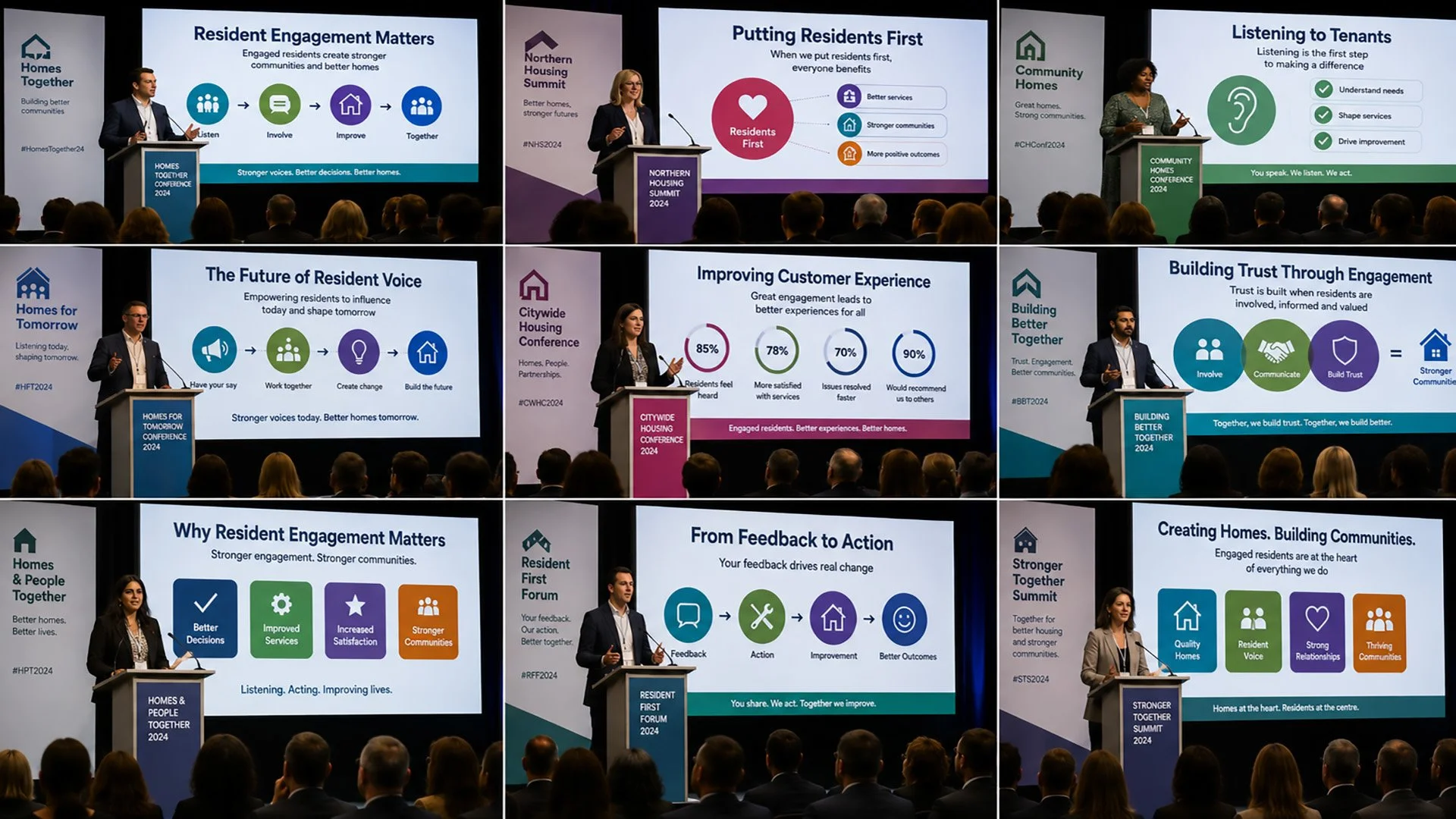
More Than 40 Events — And It’s Only September!
Let me reiterate this, I am not against events or awards. I really want people to understand that. There is a place for them, there is a purpose, there is a need and, to a certain extent, a requirement for people working within housing to come together, share knowledge, learn from each other and recognise good work.
There are people working within this sector who put in long hours with the very best of intentions. When services are delivered well, expectations are exceeded and individuals or teams have genuinely achieved something exceptional, I understand the desire to recognise and celebrate that.
I get it, I genuinely get it. I am not arguing that we should ban events or stop recognising good work, but then you start looking at the numbers and that is where my problem begins.
I asked my loyal AI assistant to do some research. I said, ‘Go and find out how many events and award ceremonies there have been this year focused on housing.’
I haven’t checked and verified every single one of these myself, so I will attach the worksheet and you can have a look and see whether it holds true. But so far, we have identified more than 40 housing-related events in 2026 already, and we are only at the beginning of September. And there are plenty more being promoted for September, October, November and December.
And these aren’t all variations of one annual housing conference.
The 24th February alone saw the National Housing Federation’s Customer Experience and Resident Engagement Conference in London and Housing LIN’s annual conference in Newcastle.
The subjects stretch across communications and influencing, board leadership, customer experience and resident engagement, housing finance, quality of homes, development and regeneration, affordable home ownership, governance, investment, sustainability, service charges, treasury, audit and risk — alongside awards ceremonies, exhibitions, summits and networking events.
The National Housing Federation’s programme alone demonstrates the scale. Its published 2026 conference calendar lists 13 ticketed conferences across the year, beginning with Comms and Influencing in Housing in January and continuing through Board Leadership, Customer Experience and Resident Engagement, Housing Finance, Quality Homes, Development and Regeneration, Affordable Home Ownership and Housing Governance. (National Housing Federation)
And it doesn’t stop with the summer!
September brings the two-day Housing Community Summit in Liverpool, followed by further events covering service charges, treasury, audit and risk, with the National Smaller Housing Associations’ Conference taking us into December. (National Housing Federation)
Nor is this confined to one organisation. The Housing Forum’s 2026 calendar, for example, includes events around housing partnerships, future homes, sustainability and its presence at major gatherings including UKREiiF and Housing 2026, with further events scheduled for September and October. (The Housing Forum) Housing LIN ran its annual conference twice this year — Newcastle on 24 February and Bristol on 12 March. (Housing LIN)
At points, the calendar becomes remarkably congested. The 24th February alone saw the National Housing Federation’s Customer Experience and Resident Engagement Conference in London Housing and LIN’s annual conference in Newcastle.
That is before we get into the wider awards circuit, something I will be covering. So this isn’t an argument against people meeting, learning, networking or celebrating success. It is an argument about scale.
Once you get beyond 40 events in eight months, with still more to come, I think it becomes perfectly reasonable to ask whether housing simply has an events calendar — or whether housing has developed an events problem.
What Are All These Events Actually For?
Let’s push aside, for a moment, my concern that the housing events circuit has, in my opinion, apparently developed into a revenue-generating sector in its own right. For now, I want to ask a much simpler question — what are all these events actually for?
One obvious answer is procurement.
If you provide equipment or services to housing associations, events offer an opportunity to exhibit, sponsor a stand, deliver a presentation and put you and your product directly in front of the people who might buy, rent or lease it.
Whether you are selling fire-safety equipment, CRM systems, consultancy, training, technology or the latest IoT solution, the attraction is obvious; get yourself into the room with the people who can potentially sign the purchase order.
There is nothing unusual about businesses wanting access to customers. But when access increasingly depends upon paying to exhibit, sponsor or participate, we should at least question whether this creates a pay-to-play procurement environment.
What happens to the smaller company with an excellent product or understanding but without the marketing budget or appetite to buy its way into that room?
I have raised similar concerns previously about the Chartered Institute of Housing and the potential problems created when organisations effectively become gatekeepers between suppliers and housing-sector decision-makers. I am not going to revisit that entire argument here.
But there is another problem.
Housing is a remarkably small world, its own little ecosystem, a small incestuous pond. People move between organisations, meet former colleagues and repeatedly encounter many of the same suppliers, consultants and professional networks.
Events inevitably reinforce those relationships. The same people meet the same people, discussing many of the same problems and being presented with many of the same solutions. This is creating a closed loop.
New housing job. Same conference circuit, same suppliers, same technology, same consultants, another purchase order, and so on, and so forth.
And perhaps some of those solutions are working. Perhaps some of the benefits are largely invisible precisely because problems have been prevented.
But after years of new technology, new systems, new consultancy, new training and new initiatives, residents are entitled to ask - where are the outcomes?
Then we come to resident engagement, something you really shouldn’t get me started on!
How to engage with tenants, how to rebuild trust, how to improve customer experience, how to handle complaints, and less we forget - how to listen.
These themes appear repeatedly across the events circuit, including events specifically devoted to resident and tenant engagement. But I think housing sometimes fundamentally misunderstands what many residents actually want.
We just want you guys to do your job.
Most tenants don’t want to become housing professionals. I didn’t want to become a housing campaigner or activist, whatever it is you label me as. I certainly never wanted to. The residents I’m finding on TikTok who have been ignored don’t want to be activists, don’t want to turn up at events, and don’t want to support your local initiative. We just want you guys to do your job. And yet, when I have spoken out, my goodness me, has there been pushback, and my goodness me, have I been villainised.
Most of us residents are working, raising children, doing school runs, caring for relatives, paying bills, participating in our communities and getting on with our lives. We don’t want to attend a conference to explain to our landlord how to engage with us. We shouldn’t have to tell you how to do your job, we pay you to do your job.
And let’s face the cold, hard facts here, you know how to communicate with us, you know how to engage with us, you know what you’re getting wrong, and the resident engagement angle is merely there so that, when you’ve ignored the issues, turned your back on the customers and buried your head in the sand, you can say you are actively seeking to improve your resident engagement.
We want our landlord to do its job.
That means providing a home that is warm, safe, dry and affordable; answering the telephone, communicating properly, fixing repairs, handling complaints fairly, and (dare I suggest) treating residents with respect. Treat us like customers who have consumer rights and could choose to walk away.
Some events (TPAS, for example) invite “informed tenants”. When attending an engagement event can require a ticket costing hundreds of pounds, plus potentially travel and accommodation, another question arises; which residents can realistically participate, even if there is a desire to attend?
In a recent Facebook post, Nick Bliss from Stop Social Housing Stigma advised people to ask their landlord to pay for their ticket!

Let’s get that right, the person you’re supposedly having a problem with because you’ve written too many complaints or sent too many angry emails is now the person you’re expected to go to, hat in hand, and say, ‘can you send me to one of these conferences for the day? I’ve taken the day off work, I’ve sorted out childcare, I just need you to cover my travel, accommodation and ticket.’
If attendance depends upon a landlord funding the ticket and perhaps the associated expenses, housing providers inevitably have considerable influence over which residents get into the room.
And that creates the danger of a closed loop of its own. A relatively small group of familiar resident representatives repeatedly being presented as the voice of a much larger and considerably more diverse population.
TPAS talks about reaching huge numbers of tenants, residents, shared owners and leaseholders. People associated with TPAS often speak about representing large numbers of residents. One associate recently suggested that, at times, just “two or three” tenants may effectively act as a proxy for “tens of thousands”. That wording alone should raise serious questions about what meaningful representation actually looks like.
In my last blog, When the Sector’s Own Code Meets Reality, I dealt with the issue of consent. So the obvious question here is, who has actually given consent to these one or two associates to represent us at all these events?
I know for a fact I haven’t. I know for a fact they don’t represent me, and I know for a fact they don’t represent many of the residents I speak to. So when people stand on stages, sit on panels or attend conferences and speak in terms of representing “tens of thousands” of tenants, residents, shared owners and leaseholders, I think we are entitled to ask who gave them that mandate in the first place.
Representation cannot simply be assumed because someone is visible, invited, funded or regularly present at sector events. If you are going to claim to speak on behalf of large numbers of residents, there needs to be some clear basis for that claim, and consent should surely be part of it.
That isn’t necessarily meaningful representation.
It’s tokenistic, it’s not worth your money, and you’re not going to learn anything from them. You’re going to hear the same slogans, the same mantras, and you heard them last year, the year before, the year before that, and I suspect for many years before that.
It creates a comfortable system in which organisations sponsor engagement, attend engagement events, display engagement credentials and celebrate engagement awards — while residents outside that circuit continue to say they do not feel heard.
So who are these events actually for?
They provide procurement opportunities. They provide suppliers with access to potential customers. They provide networking opportunities for housing professionals. They provide platforms for training and sharing ideas. And they provide housing organisations with opportunities to demonstrate that they are engaging with residents. Some of that undoubtedly has value.
But after more than 40 events already this year, I think residents are entitled to ask for something more tangible than another conference programme, another photograph from a panel discussion or another badge on a website. Where are the measurable outcomes?

Who Is Organising Them?
Once you start looking at who is actually organising all these events, another pattern begins to emerge. This is not simply 40-plus completely unrelated organisations each deciding to hold a one-off housing conference.
A relatively small number of established sector bodies appear repeatedly across the calendar, running conferences, exhibitions, networking sessions, professional development events, awards and specialist gatherings throughout the year.
The National Housing Federation is one of the clearest examples. Its published 2026 programme alone lists 13 ticketed conferences, covering communications, board leadership, resident engagement, finance, quality of homes, development, affordable home ownership, governance, service charges, treasury, audit and risk, and smaller housing associations. (National Housing Federation)
Having checked this with AI, my wife, a calculator and a bit of paper, I’m pretty confident that 13 events a year is more than one a month.
And those 13 conferences do not represent the entirety of its events activity. At the time of writing, the Federation’s wider events calendar displays around 35 events, including member networks, roundtables and online sessions alongside its major conferences. (National Housing Federation)
Then there is the Chartered Institute of Housing, another major institution within the sector.
This year CIH and the National Housing Federation have combined forces for the Housing Community Summit in Liverpool on 8–9 September. The organisers describe it as bringing together thousands of housing professionals, stakeholders, politicians and residents, with different levels of access, including a Full Summit Pass aimed partly at strategic insight and leadership networking. (Chartered Institute of Housing)
That matters because these organisations are not simply conference companies operating on the edge of housing. They sit within the housing sector itself.
They provide membership, professional development, policy representation, networking, training and industry guidance. They have established relationships with housing associations, executives, board members, suppliers and government.
Events therefore form part of a much wider ecosystem.
And there are numerous other organisations occupying different parts of that ecosystem; tenant-engagement bodies, trade publications, specialist membership organisations, consultancies, conference organisers, awards providers and commercial businesses, all offering their own events to broadly the same housing audience.
Again, none of that is inherently wrong.
Professional bodies are expected to provide learning opportunities. Trade organisations need to bring their members together. Businesses are entitled to make money. Staff should have opportunities to develop professionally and share ideas.
The question is what happens when all of these perfectly understandable individual activities are added together. Because housing does not have one annual conference where the sector gathers, exchanges ideas and goes back to work, a Housing-Con, if you like.
An executive can attend one event on resident engagement, another on governance, another on finance, another on customer experience, another on development and another on leadership. Suppliers can move through many of those same rooms, exhibiting and sponsoring their products and services to many of the same organisations.
And because many of the organisations running these events also occupy influential positions elsewhere within housing, the relationship between membership, professional development, networking, procurement and commercial sponsorship becomes increasingly interesting.
I’m not suggesting for one moment that these events are improper, but they are certainly worthy of some scrutiny. And, as the National Housing Federation’s Code of Conduct suggests, questions are allowed to be asked, scrutiny should be encouraged, and engagement should follow.
We’re still at the scrutiny stage…
Because once events become a permanent and substantial feature of the housing landscape, we residents are entitled to ask not only what they achieve, but also who benefits from running them, who pays to attend them and how dependent parts of the sector have become on keeping the circuit moving.

How Much Does It Cost to Attend?
This is where the numbers start to matter.
When we talk about the cost of housing events, it is very easy to look at the advertised ticket price and stop there. But that is not the real cost.
Housing organisations already spend money participating in the professional infrastructure surrounding the sector. They pay membership subscriptions to organisations such as the National Housing Federation, while employers may also fund professional memberships for staff through bodies such as the Chartered Institute of Housing.
CIH individual membership, for example, currently costs £278 a year for standard or certified practitioner membership and £418 for chartered members and fellows. Membership brings benefits including access to some events and discounts on training and other activity. (Chartered Institute of Housing)
Then come the events themselves.
Take the National Housing Federation’s Treasury in Housing 2026 conference in London. An early-bird ticket currently costs £445 for an employee of an NHF member owning more than 2,000 homes, rising to £495 at the standard rate. A not-for-profit organisation that is not receiving the NHF member rate pays £495 early bird or £545 standard. (treasury.housing.org.uk)
The Federation’s Audit and Risk Conference, held over two days in Birmingham in November, costs an NHF member with more than 2,000 homes £610 early bird or £685 standard per delegate. For other not-for-profit organisations, that becomes £680 or £755. (auditandrisk.housing.org.uk)
Its Leaseholder and Tenant Service Charges Conference in London costs a larger NHF member between £390 and £490 per delegate, depending on when the ticket is purchased. Interestingly, the Federation actively encourages organisations to bring colleagues, offering four places for the price of three. Accommodation is specifically excluded from the ticket price. (servicecharges.housing.org.uk)
And it isn’t only the National Housing Federation.
TPAS’s National Tenant Conference 2026 charged £515 for a two-day member ticket and £665 for a non-member ticket, excluding VAT.
Its upcoming National Tenant Scrutiny Conference in Northampton costs £225 for members or £299 for non-members. TPAS also advertises a hotel rate of £130 for one night’s bed and breakfast for delegates attending that event.
And this is where we need to stop thinking about the ticket price. A £225 conference is not necessarily a £225 conference. Add a £130 hotel room and we are already at £355.
Then add the train fare or mileage, taxis or parking, food and other subsistence, and, most importantly, the salary cost of sending an employee away from their normal job for the day.
For a two-day conference, potentially add another night’s accommodation and another day of paid staff time.
Send three or four members of staff and suddenly an event advertised at a few hundred pounds per ticket can represent an organisational cost running comfortably into the thousands. And then repeat that process across the year.
The individual expenditure might look relatively modest when viewed as a single invoice. But that is precisely why I think we need to look at the cumulative figure rather than individual transactions.
There is also something particularly interesting about the relationship between membership and events.
Organisations can pay to belong to sector bodies and then pay again to attend some of those bodies’ larger conferences — albeit usually at a discounted member rate. That is a perfectly legitimate business model. Assuming, of course, that the combined fee is of equal or lesser value than the outcome. If you’re going to pay circa £500 for one person to attend, that person has to bring at least £500 of value back to your business. But of course we’re talking about housing, where money and value sometimes seem to run through people’s hands as if it isn’t their own. And, fundamentally, that’s because it isn’t.
Residents are entitled to ask how much the entire relationship costs their landlord each year and what measurable value comes back in return.
And we already know events represent serious money for the organisations providing them.
The Chartered Institute of Housing’s own accounts provide a particularly revealing example. In the year ending March 2025, CIH reported £3.36 million of corporate partnership sales, substantially above its £1.9 million target. It said 37% of that partnership turnover related to events — roughly £1.24 million if that percentage is applied to the reported total. CIH specifically attributed the growth partly to the Housing Community Summit and improvements to its exhibition and sponsorship offering. (Chartered Institute of Housing)
That does not mean £1.24 million came from housing associations alone, nor does it represent CIH’s entire events income. Its corporate partners include commercial organisations as well as housing providers. But it demonstrates something important.
Events are not incidental to this sector. They are economically significant.
And when housing associations tell residents that rents must increase, service charges are rising and resources have to be prioritised carefully, I think it is entirely reasonable for those residents to ask:
How much are you spending on memberships, conferences, awards, travel, accommodation, expenses and staff time — and what are we getting for it?

How Does This Look to Residents?
As residents, we are often sidelined from the conversations taking place within housing, and perhaps surprisingly, that isn’t necessarily the problem.
As stated above, many of us don’t want to be involved in the machinery of housing. We don’t want to attend conferences, sit on panels or spend our time explaining to housing professionals how housing should work.
We want to pay for a service, and we want that service delivered.
We want the cost to be fair. More importantly, we want our families to live in homes that are warm, safe, dry and affordable.
That is housing condensed down to its absolute core. Deliver that, and have as many events and awards as you like. But you’re not consistently delivering that, are you? And if you were, would the sector really need so many conferences discussing how to rebuild trust, improve customer experience, handle complaints, engage residents and transform services?
Residents are also much more aware of what happens behind the scenes than perhaps they once were. Social media has changed that.
Events have to be promoted beforehand. Photographs and videos appear during them. Then come the LinkedIn posts celebrating another successful conference, another fascinating panel and another opportunity to catch up with friends and former colleagues. Then the promotion begins for the next one.
From inside the sector, that might look like networking, professional development and sharing best practice. From the other side, it can look very different.
The Instagram-ready post of someone enjoying a coffee on the beach in Brighton, the group photograph of everyone smiling and fist-pumping the air about how great it is to reunite and provide such great services to our customers, the selfie with the branding — like so much of social reality, it is promoting an image that simply isn’t true. And so many of us are aware of that these days, which leaves a bitter taste in our mouths.
To a resident facing another rent increase, another service-charge increase, an outstanding repair or another complaint, photographs of staff travelling around the country attending conferences and awards ceremonies can simply look like a jolly.
That perception may sometimes be unfair. But housing providers need to understand why it exists.
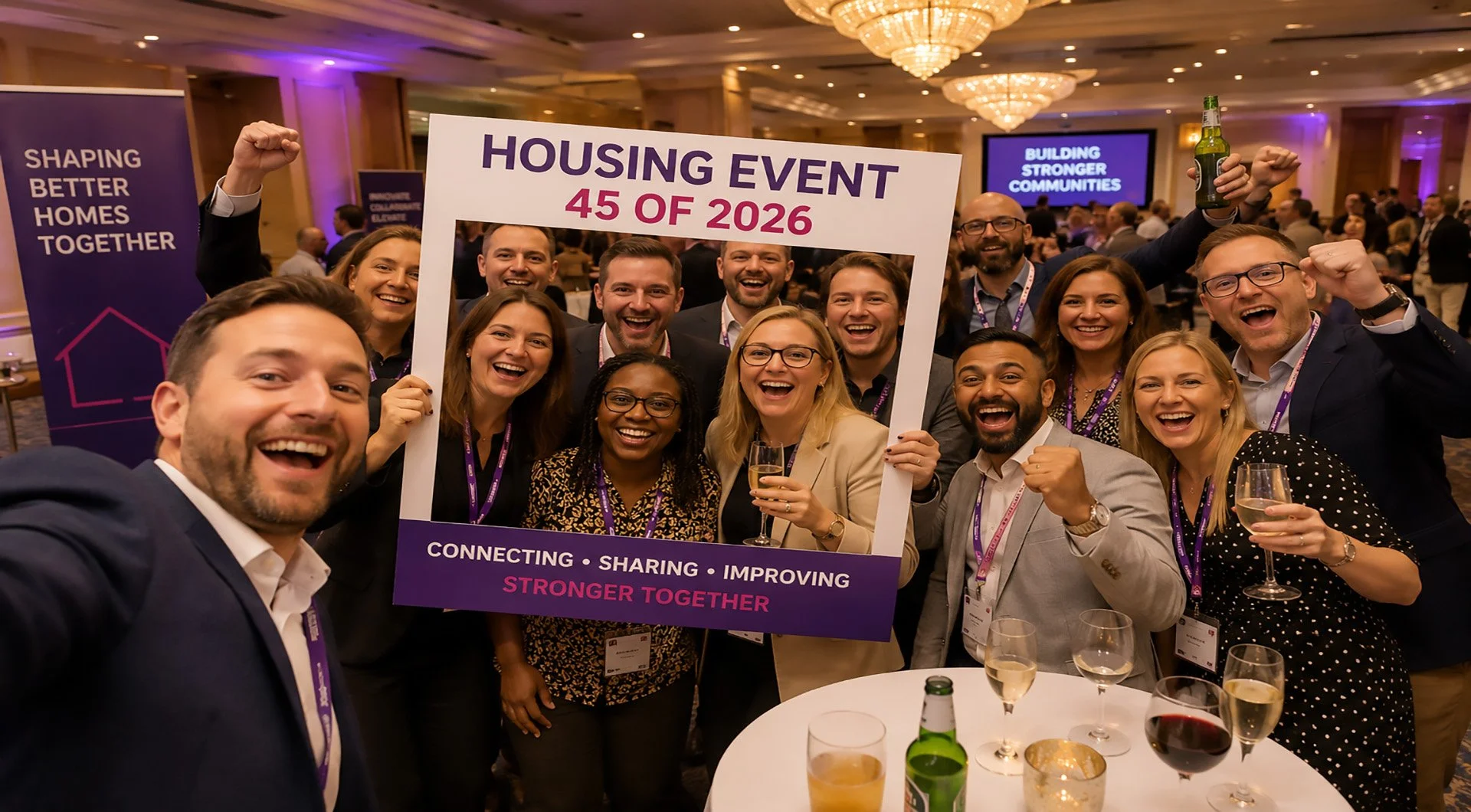
The problem is that residents cannot see the return.
Where are these positive outcomes? Where can we see them? Where can we feel them? And where are they reflected in what we are being asked to pay?
Look at my own landlord, GreenSquareAccord. It recently reported an operating surplus of more than £40 million, while its involvement in the Stirchley community-led housing development collapsed amid a dispute fundamentally involving the financial viability and terms of the scheme. We will properly source and examine those figures before publication, but from a resident’s perspective the contrast matters.
When landlords tell us money is tight while residents see service charges increasing and services deteriorating, expenditure elsewhere inevitably attracts scrutiny.
CEO salaries and bonuses receive attention because they are (mostly) visible. But perhaps we need to look further down.
How much does each housing provider spend annually on conference tickets? Awards? Memberships? Travel? Hotels? Subsistence? And how many paid working days disappear into attending them?
I don’t think those are unreasonable questions.
Get the basics right and most residents won’t care. Whilst you don’t, you must expect scrutiny.
Because if somebody travels to a conference at their employer’s expense, spends a substantial part of the day networking with former colleagues and returns without anything demonstrably changing for residents, I am entitled to question the value of that expenditure.
Perhaps housing associations themselves should start publishing the answer.
Last year we attended X events. We sent X members of staff. Tickets, travel, accommodation and expenses cost £X. Staff time cost approximately £X. And these were the measurable outcomes we achieved as a result.
That would be transparency.
And perhaps some organisations would discover that the expenditure was entirely justified. Others might conclude that some of that money would be better spent reducing costs, improving frontline capacity or simply delivering the basic services residents are already paying for.
I keep coming back to the same point. Get the basics right and most residents won’t care. Whilst you don’t, you must expect scrutiny.
As I started raising questions about the 40-plus events I had identified this year, I received some pushback from within the sector. One recurring response was essentially that I simply don’t see the benefits these events produce.
I have been living under a shared-ownership arrangement for more than a decade. From where I sit, the product, the service and the value for money have deteriorated. So don’t simply tell residents that conferences generate positive outcomes.
Show us, or dare I suggest, start delivering.